.png)


DIOGO FERRÃO REFLECTS ON SUPERCARS ENDURANCE’S GROWTH AND FUTURE AMBITIONS
- SuperCars Endurance GT4 South

- 12 minutes ago
- 6 min read
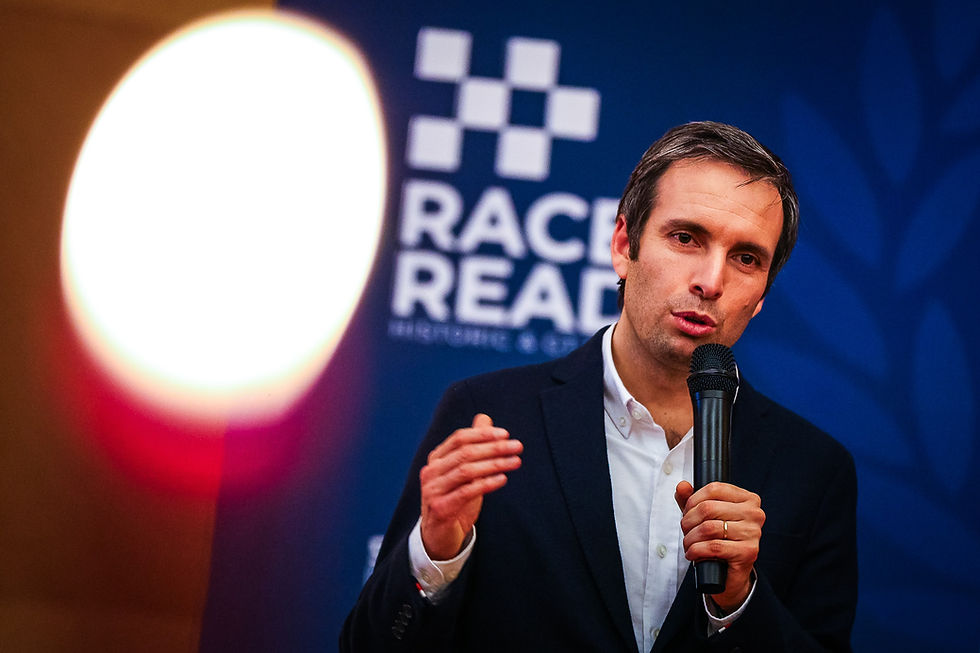
The 2026 season is confirming the progress made in recent years. The Supercars Endurance series are currently enjoying the strongest period in its history, with grids that, at permanent circuits, exceed fifty cars split across two separate fields. The growth of the championships, the arrival of new drivers and teams, the strengthening of its international profile and the introduction of new categories all demonstrate the maturity reached by the project promoted by Race Ready.
For Diogo Ferrão, the organisation’s leading figure, these results have not happened by chance. Instead, they are the result of several years of work, strategic decisions and the ability to maintain the original vision, even when many questioned the viability of an Iberian GT championship.
“Every success story has a reason behind it. It is always the result of several factors coming together. I would highlight three. First of all, resilience and the ability to adapt. The project and the concept were not initially well received, because many people believed that a championship of this level would be too expensive for the reality of the Iberian Peninsula. We ended up proving exactly the opposite: despite the glamour and performance of GT cars, the running costs are perfectly reasonable. We had to be patient, adapt the format to the needs of teams and drivers, but without ever compromising the concept we created from day one,” began Diogo Ferrão.
However, an idea alone is not enough; it needs the right people to bring it to life: “The second factor is the team behind the championship. Only a truly passionate team can cope with the constant pressure from teams and drivers, the long weeks of preparation and the permanent need to find solutions for the unexpected challenges that are part of organising any event of this scale.”

The competitive environment also provides a significant advantage, provided it is properly developed. “Finally, we have an extraordinary advantage: the Iberian Peninsula offers exceptional conditions for motorsport. We have some of the best circuits in Europe, highly qualified technical personnel, outstanding facilities, a recognised tradition in terms of race officials and a climate that allows competition virtually all year round. All of this helps explain why so many international drivers choose the Supercars Endurance championship and why Iberian drivers now have fewer reasons to look elsewhere for opportunities in other countries,” he added.
This growth is not reflected only in the number of entries. The quality of the field has improved significantly, bringing together established professional drivers, young talents from several continents and teams with experience in the leading international championships. For many drivers at the beginning of their careers, Supercars Endurance has become regarded as one of the best environments in which to gain experience before stepping up to European-level competition.
Diogo Ferrão acknowledges that this evolution has been closely followed by driver development programmes and representatives from several manufacturers: “Increasingly, young drivers looking to build careers in GT racing are coming to us through recommendations from international motorsport professionals and even official manufacturer programmes. Today, there is a clear perception that completing a first season in Supercars Endurance represents an excellent opportunity to gain experience, competitiveness and maturity before taking on more ambitious challenges.”

However, the series has never lost one of the characteristics that has set it apart since its creation: the ability to bring professional drivers and gentleman drivers together in the same paddock, providing each with a competitive environment suited to their sporting journey.
For Race Ready’s head of organisation, this diversity is one of the championship’s greatest strengths. “In reality, it is quite a straightforward situation to manage. There are many drivers who were only able to combine their professional lives with their dream of competing in high-performance cars later in life. Naturally, when they start racing at a later stage, they do not have the same development pathway as a young professional driver,” he explained.
He added: “That is precisely why we created the GT4 Am category. It works as a first step before moving into GT4 Bronze. The most interesting aspect is seeing how these drivers develop. Many started without any significant experience and, thanks to their talent, the use of telemetry, modern data acquisition systems and the support of more experienced drivers, they are able to reduce lap times in an impressive way. After a few years, many are already fighting for positions with drivers considered professionals.”
This philosophy of creating solutions for different types of competitors also explains the growth of the GTC division, which this year earned its own dedicated grid alongside the Touring Cars.

According to Diogo Ferrão, the category responded to a genuine need within the market. “GTC was created to allow GT cars whose homologation period had ended to continue competing. At the same time, it offers a much more accessible route into the Supercars Endurance series environment, without requiring the investment needed to purchase a more recent GT4 car. Initially, it was simply a category within the GT4 grid. Interest grew to such an extent that we reached the point where we could organise dedicated races, which represents a very important step for the future of the division.”
While GTC is currently experiencing a period of expansion, the situation is different in the Touring Car category. Despite featuring some very interesting machinery, the number of entries remains below the desired level.
Nevertheless, Diogo Ferrão believes that progress is already underway: “We have not yet reached the numbers we would like, but I believe the BMW M2 Cup Iberia can play an important role in that growth. The BMW M2 Racing has shown from its first races that it is a highly competitive car and capable of producing excellent racing. Perhaps there is also another factor affecting the Touring Car category: Daniel Teixeira has been performing at an extremely high level, which naturally makes him very difficult to beat. However, I believe that as more cars arrive in the Iberian Peninsula, we will see this category continue to grow.”
The creation of the BMW M2 Cup Iberia was, in fact, one of the main innovations of the current season. Despite initial challenges with vehicle availability, the early assessment has been clearly positive and the future is viewed with optimism.
“The first few months were naturally more challenging, because this is a very recent project. The first car only arrived in the Iberian Peninsula at the end of April, which significantly limited the opportunities to run tests with potential customers,” explained Diogo Ferrão.
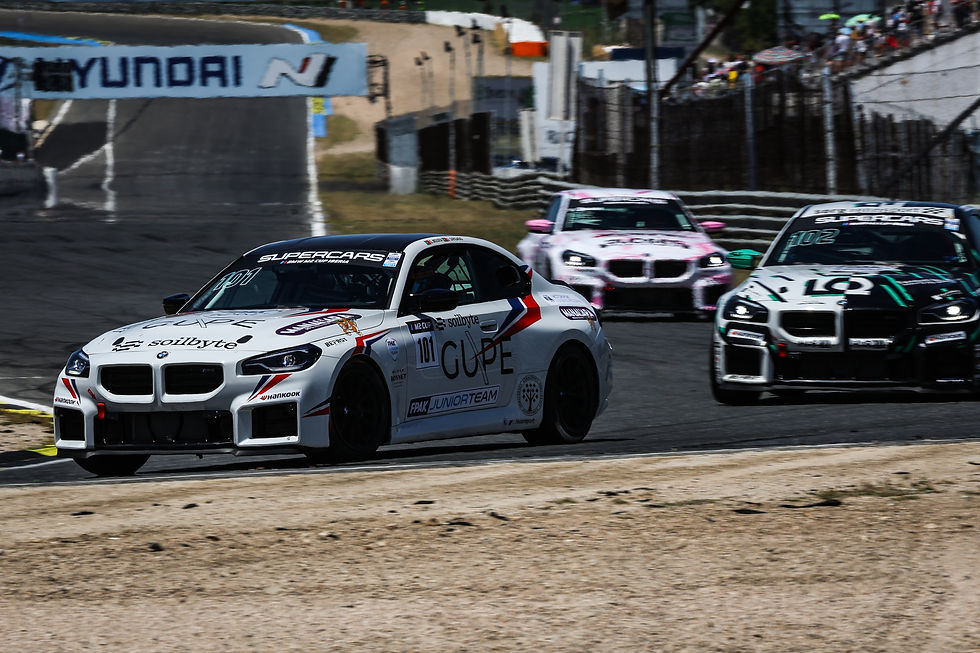
He continued: “That situation will change quickly. From September onwards, delivery times will become considerably shorter and, with several cars already available in the Iberian Peninsula — we currently have five — we will have the conditions to organise many more test sessions. I am convinced this will accelerate the growth of the BMW M2 Cup Iberia.”
While growth has been a common feature across most rounds, there is one event that stands apart from this trend. Vila Real, due to the unique characteristics of its street circuit and its historic connection with Portuguese fans, continues to attract fewer entries than the other events, with a grid that remains almost exclusively national. Diogo Ferrão does not avoid the subject.
"Looking at the entry list, the reality is that in Vila Real we ended up with almost exclusively Portuguese drivers. Moreover, many of the foreign drivers who come here really enjoy the experience, but they don't return. This year we had the exception of Adam (Fawsitt), who came back after making his first appearance last season," he acknowledged.

The solution, he admits, will not come overnight: "I believe this is something we need to discuss with the circuit's organisers to find the right solutions."
The Vila Real situation also highlights a wider challenge: building the calendar while maintaining the balance between the identity of each event, circuit availability and the interests of the teams.
Calendar stability has been another hallmark of the Supercars Endurance series. Nevertheless, the organisation continues to assess new opportunities, always seeking the best balance between the needs of teams and the availability of circuits.
“Every year we analyse different possibilities. Even last season, we met with the teams to study several alternatives proposed by different circuits. The challenge is finding dates that are compatible with the international calendars in which many of our teams also compete.
“But it is an excellent problem to have. It means there are many circuits interested in hosting Supercars Endurance. This demonstrates the growth of the championship and also the audience we have been building at each event,” concluded Diogo Ferrão.
That growth will be tested once again at the next round of the season, taking place from 25 to 27 September at the Circuit Ricardo Tormo in Valencia, where Supercars Endurance series will return to action for another race weekend scoring towards the Iberian Supercars and the Campeonato de España de Supercars.


Comments